

Construction teams are under increasing pressure to complete projects faster while managing labor availability, tight schedules, and growing demands for productivity. Layout work is essential to construction accuracy, but much of it involves repetitive marking and positioning tasks that can consume valuable field time. As contractors look for practical ways to improve efficiency, robotic layout is becoming an increasingly relevant option.
HP SitePrint is designed to automate floor layout using digital construction plans and robotic navigation. RPG Squarefoot Solutions helps contractors explore HP SitePrint technology as part of their construction automation strategy. In this post, we examine how robotic layout works, where it delivers the most value, and what contractors should consider before adoption.
What Is HP SitePrint?
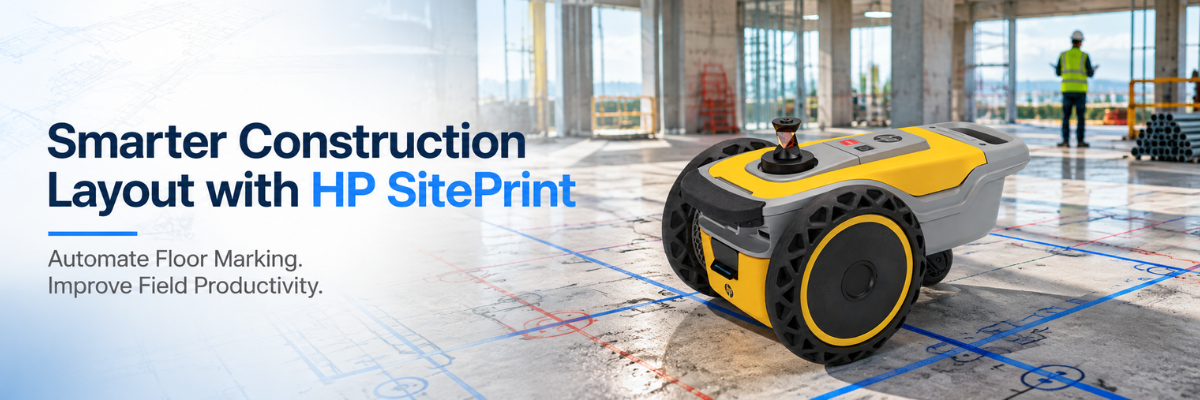
HP SitePrint is a three-wheeled robotic printer with an integrated tracking prism that works with a Robotic Total Station to determine the robot’s position on the jobsite. The total station measures the distance and angle to the prism, allowing the robot to follow predefined coordinates from the construction layout.
The robot uses a 2D CAD file containing the layout elements to be printed. After the file is loaded and the print area is selected, HP SitePrint autonomously navigates the construction site and applies ink to print the specified layout directly onto the floor.
Challenges With Traditional Construction Layout
Traditional layout methods remain essential on many jobsites, but manual processes can create productivity constraints when projects involve large floor areas, multiple levels, or demanding schedules.
Common challenges include:
- Manual Marking: Measuring, positioning, and marking layout points across large areas can require considerable field time and effort.
- Verification Requirements: Crews must check measurements and markings carefully to maintain alignment with the project plans and avoid downstream errors.
- Skilled Labor Utilization: Skilled workers may spend significant time on layout activities that could otherwise be allocated to coordination, installation, or other specialized responsibilities.
- Schedule Constraints: Delays in completing floor layout can affect the work of subsequent trades and create pressure on project schedules.
These factors are prompting contractors to explore automation to improve field productivity and make more effective use of available labor.
How HP SitePrint Improves Construction Productivity
HP SitePrint can improve construction layout productivity by automating floor marking and reducing the time crews spend on routine layout activities. Its capabilities can support field teams in several practical ways:
- Reduces Layout Labor: Automating floor marking reduces the crew time needed for measuring, positioning, and manually marking layout elements.
- Handles Extensive Layout Requirements: The robot can work across large floor areas and repeat defined layouts across multiple spaces, making it useful for projects with substantial marking requirements.
- Maintains Consistent Placement: SitePrint follows predefined digital layout information to place lines, points, arcs, and text according to the specified design.
- Allows Parallel Field Activities: Once the layout task is initiated, autonomous operation allows field personnel to attend to other project activities instead of continuously performing manual marking.
- Provides Digital Progress Visibility: SitePrint provides information about the layout process, allowing teams to monitor progress and identify areas that may require attention.
Where HP SitePrint Delivers the Most Value
HP SitePrint is most relevant on projects where floor layout involves extensive marking, repeated floor plans, or a high volume of layout information that can be prepared digitally.
- Large Commercial Buildings: Office buildings, hotels, hospitals, and similar projects can involve extensive floor areas and repeated layout requirements across multiple levels.
- Projects With Repeated Floor Plans: Buildings with standardized or similar layouts across several floors can benefit from an automated process that follows the same digital layout information for each area.
- Interior Fit-Out Projects: Layout for partitions, walls, rooms, and other interior elements can involve substantial floor marking before installation begins. Robotic printing can help reduce the manual work involved in these tasks.
- High-Volume Layout Work: Projects with thousands of layout elements or frequent marking requirements can provide greater opportunities to use automation and allocate field personnel to other responsibilities.
- Projects Using Digital Construction Workflows: Contractors already working with BIM and 2D CAD data may find it easier to incorporate robotic layout into their existing digital-to-field processes.
What to Consider Before Adopting Robotic Layout
Before implementing robotic layout, contractors should assess how the technology fits their project requirements, digital processes, and field operations.
- Layout Complexity: Evaluate the types of elements that need to be printed, including walls, partitions, points, arcs, and text, and determine whether they are suitable for robotic printing.
- Digital File Preparation: Confirm that project layout information can be prepared in a compatible 2D CAD format and incorporated into the robotic workflow.
- Jobsite Conditions: Consider floor conditions, available working space, obstacles, and other site factors that could affect robot movement and layout operations.
- Project Repetition: Assess whether the project includes recurring layouts or multiple areas where the same automated process can be used consistently.
- Existing Technology: Review how robotic layout will integrate with the contractor's existing BIM, CAD, surveying, and construction management processes.
Explore HP SitePrint for More Efficient Construction Layout
Robotic layout can be a practical addition to projects where floor marking represents a significant field workload. HP SitePrint gives contractors an option to automate this part of the construction process while keeping digital layout information connected to field execution.
RPG Squarefoot Solutions can help you evaluate HP SitePrint for your project requirements and determine how it can fit into your existing construction workflow. Explore HP SitePrint Solutions to learn more.
Blog Latest Posts
Construction teams are under increasing pressure to complete projects faster while managing labor availability, tight schedules, and growing demands for productivity. Layout work is essential to construction accuracy, but much of it involves repetitive marking and positioning tasks that can consume valuable field time. As contractors look for practical ways to improve efficiency, robotic layout is becoming an increasingly relevant option.
HP SitePrint is designed to automate floor layout using digital construction plans and robotic navigation. RPG Squarefoot Solutions helps contractors explore HP SitePrint technology as part of their construction automation strategy. In this post, we examine how robotic layout works, where it delivers the most value, and what contractors should consider before adoption.
What Is HP SitePrint?
HP SitePrint is a three-wheeled robotic printer with an integrated tracking prism that works with a Robotic Total Station to determine the robot’s position on the jobsite. The total station measures the distance and angle to the prism, allowing the robot to follow predefined coordinates from the construction layout.
The robot uses a 2D CAD file containing the layout elements to be printed. After the file is loaded and the print area is selected, HP SitePrint autonomously navigates the construction site and applies ink to print the specified layout directly onto the floor.
Challenges With Traditional Construction Layout
Traditional layout methods remain essential on many jobsites, but manual processes can create productivity constraints when projects involve large floor areas, multiple levels, or demanding schedules.
Common challenges include:
- Manual Marking: Measuring, positioning, and marking layout points across large areas can require considerable field time and effort.
- Verification Requirements: Crews must check measurements and markings carefully to maintain alignment with the project plans and avoid downstream errors.
- Skilled Labor Utilization: Skilled workers may spend significant time on layout activities that could otherwise be allocated to coordination, installation, or other specialized responsibilities.
- Schedule Constraints: Delays in completing floor layout can affect the work of subsequent trades and create pressure on project schedules.
These factors are prompting contractors to explore automation to improve field productivity and make more effective use of available labor.
How HP SitePrint Improves Construction Productivity
HP SitePrint can improve construction layout productivity by automating floor marking and reducing the time crews spend on routine layout activities. Its capabilities can support field teams in several practical ways:
- Reduces Layout Labor: Automating floor marking reduces the crew time needed for measuring, positioning, and manually marking layout elements.
- Handles Extensive Layout Requirements: The robot can work across large floor areas and repeat defined layouts across multiple spaces, making it useful for projects with substantial marking requirements.
- Maintains Consistent Placement: SitePrint follows predefined digital layout information to place lines, points, arcs, and text according to the specified design.
- Allows Parallel Field Activities: Once the layout task is initiated, autonomous operation allows field personnel to attend to other project activities instead of continuously performing manual marking.
- Provides Digital Progress Visibility: SitePrint provides information about the layout process, allowing teams to monitor progress and identify areas that may require attention.
Where HP SitePrint Delivers the Most Value
HP SitePrint is most relevant on projects where floor layout involves extensive marking, repeated floor plans, or a high volume of layout information that can be prepared digitally.
- Large Commercial Buildings: Office buildings, hotels, hospitals, and similar projects can involve extensive floor areas and repeated layout requirements across multiple levels.
- Projects With Repeated Floor Plans: Buildings with standardized or similar layouts across several floors can benefit from an automated process that follows the same digital layout information for each area.
- Interior Fit-Out Projects: Layout for partitions, walls, rooms, and other interior elements can involve substantial floor marking before installation begins. Robotic printing can help reduce the manual work involved in these tasks.
- High-Volume Layout Work: Projects with thousands of layout elements or frequent marking requirements can provide greater opportunities to use automation and allocate field personnel to other responsibilities.
- Projects Using Digital Construction Workflows: Contractors already working with BIM and 2D CAD data may find it easier to incorporate robotic layout into their existing digital-to-field processes.
What to Consider Before Adopting Robotic Layout
Before implementing robotic layout, contractors should assess how the technology fits their project requirements, digital processes, and field operations.
- Layout Complexity: Evaluate the types of elements that need to be printed, including walls, partitions, points, arcs, and text, and determine whether they are suitable for robotic printing.
- Digital File Preparation: Confirm that project layout information can be prepared in a compatible 2D CAD format and incorporated into the robotic workflow.
- Jobsite Conditions: Consider floor conditions, available working space, obstacles, and other site factors that could affect robot movement and layout operations.
- Project Repetition: Assess whether the project includes recurring layouts or multiple areas where the same automated process can be used consistently.
- Existing Technology: Review how robotic layout will integrate with the contractor's existing BIM, CAD, surveying, and construction management processes.
Explore HP SitePrint for More Efficient Construction Layout
Robotic layout can be a practical addition to projects where floor marking represents a significant field workload. HP SitePrint gives contractors an option to automate this part of the construction process while keeping digital layout information connected to field execution.
RPG Squarefoot Solutions can help you evaluate HP SitePrint for your project requirements and determine how it can fit into your existing construction workflow. Explore HP SitePrint Solutions to learn more.