

Modern construction projects generate vast amounts of data, yet many teams still struggle with limited visibility into project performance, asset conditions, and operational risks. Cost overruns, schedule delays, and inefficient maintenance decisions often occur because critical information is disconnected across different systems. As projects become more complex, construction firms need smarter ways to monitor assets, manage performance, and make informed decisions throughout the project lifecycle.
This is where Digital Twin technology is changing the industry. By combining real-world data with intelligent digital models, Digital Twins provide continuous insight into how assets perform over time. RPG Squarefoot Solutions helps organizations bring together design, construction, and operational data into a connected digital environment that supports deeper project insights, improved asset oversight, and more informed decision-making throughout the asset lifecycle. In this post, we explore what a Digital Twin is, how it differs from BIM, and why it is becoming an essential tool for modern construction projects.
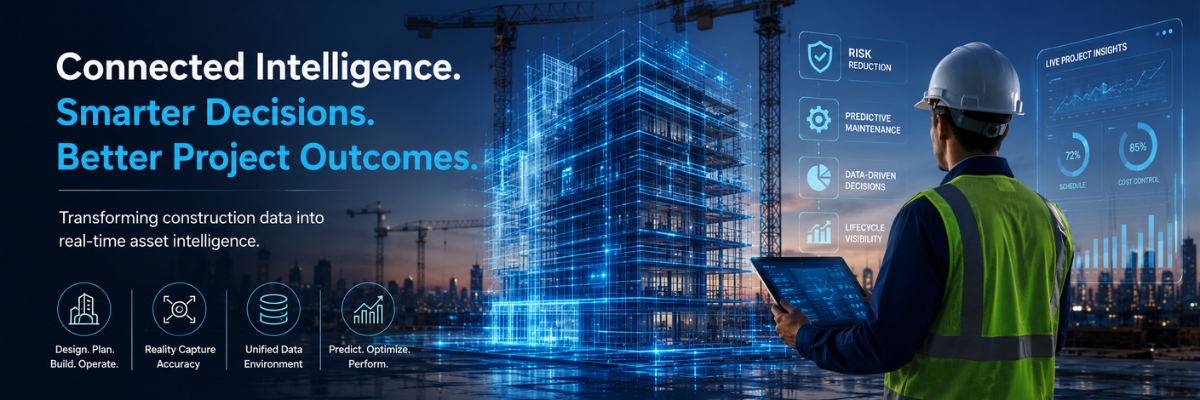
What Is a Digital Twin?
A Digital Twin is a dynamic digital representation of a physical asset, building, or infrastructure project that continuously receives and updates information from real-world conditions. Unlike traditional models that represent a project at a specific point in time, a Digital Twin evolves throughout the asset lifecycle.
Many people compare Digital Twins to Building Information Modeling (BIM), but the two serve different purposes. BIM provides a detailed digital model used for design, planning, and construction coordination. A Digital Twin builds upon that foundation by connecting the model to real-time data from sensors, IoT devices, operational systems, and other data sources.
This continuous flow of information allows project teams to monitor asset performance, identify issues, and make informed decisions based on current conditions rather than static project data.
Why Digital Twins Matter in Construction
As construction projects become more sophisticated, stakeholders need greater visibility into both project execution and long-term asset performance. Digital Twins provide that visibility by creating a connected environment where data can be analyzed in real time. Key reasons why Digital Twins are becoming increasingly important include:
- Lifecycle Visibility: Monitor asset performance from design and construction through operation and maintenance using a single connected platform.
- Risk Reduction: Identify performance issues, operational inefficiencies, and potential failures before they become costly problems.
- Better Decision-Making: Access real-time information that supports faster, more accurate decisions across project teams and stakeholders.
- Unified Data Environment: Consolidate information from BIM, reality capture, sensors, asset databases, and operational platforms into a single source of truth for project and facility teams.
By transforming data into actionable insights, Digital Twins help organizations move from reactive problem-solving to proactive project management.
Key Benefits of Digital Twin Technology
Digital Twins deliver value far beyond visualization. They create an intelligent decision-support environment that helps improve project outcomes and asset performance.
Some of the most significant benefits include:
- Real-Time Monitoring: Continuously track asset conditions, operational performance, and environmental factors using live data feeds.
- Predictive Maintenance: Detect patterns that may indicate equipment degradation or future failures, allowing maintenance teams to intervene early.
- Cost Optimization: Improve resource allocation, reduce unplanned downtime, and support more efficient lifecycle management.
- Enhanced Asset Intelligence: Gain deeper insight into asset conditions, performance trends, and operational behavior to support more informed planning and management decisions.
These capabilities enable organizations to improve efficiency while reducing long-term operational costs.
Common Use Cases in Construction
Digital Twins support decision-making across multiple stages of the asset lifecycle.
- Project Planning: Evaluate design options, simulate scenarios, and identify potential risks before construction begins.
- Construction Execution: Monitor project progress, compare field conditions against planned models, and improve coordination among stakeholders.
- Facility Management: Track building performance, optimize maintenance activities, and support long-term operational planning after project completion.
As a result, Digital Twins continue delivering value long after construction activities have ended.
How Digital Twins Connect with Reality Capture and BIM
Digital Twins rely on accurate data to function effectively. Reality capture technologies such as 3D laser scanning and photogrammetry help create highly accurate digital representations of existing conditions. BIM provides the structured digital model used during design and construction.
Together, reality capture, BIM, operational systems, and asset data create the foundation for a Digital Twin. By connecting these information sources into a unified digital environment, organizations gain a continuously updated view of asset performance, project conditions, and operational activity throughout the lifecycle.
Future-Proof Your Projects with Digital Twin Solutions
Construction companies are increasingly adopting Digital Twins to improve decision-making, reduce lifecycle costs, and gain real-time visibility into asset performance. By extending BIM with live operational data, Digital Twins create a powerful platform for continuous monitoring, analysis, and optimization.
RPG Squarefoot Solutions helps organizations develop Digital Twin environments that connect reality capture, BIM, asset information, and operational data into a single source of project intelligence. Explore our Digital Twin services today and discover how connected data can help improve visibility, optimize performance, and support smarter decisions throughout the asset lifecycle.
Blog Latest Posts
Modern construction projects generate vast amounts of data, yet many teams still struggle with limited visibility into project performance, asset conditions, and operational risks. Cost overruns, schedule delays, and inefficient maintenance decisions often occur because critical information is disconnected across different systems. As projects become more complex, construction firms need smarter ways to monitor assets, manage performance, and make informed decisions throughout the project lifecycle.
This is where Digital Twin technology is changing the industry. By combining real-world data with intelligent digital models, Digital Twins provide continuous insight into how assets perform over time. RPG Squarefoot Solutions helps organizations bring together design, construction, and operational data into a connected digital environment that supports deeper project insights, improved asset oversight, and more informed decision-making throughout the asset lifecycle. In this post, we explore what a Digital Twin is, how it differs from BIM, and why it is becoming an essential tool for modern construction projects.
What Is a Digital Twin?
A Digital Twin is a dynamic digital representation of a physical asset, building, or infrastructure project that continuously receives and updates information from real-world conditions. Unlike traditional models that represent a project at a specific point in time, a Digital Twin evolves throughout the asset lifecycle.
Many people compare Digital Twins to Building Information Modeling (BIM), but the two serve different purposes. BIM provides a detailed digital model used for design, planning, and construction coordination. A Digital Twin builds upon that foundation by connecting the model to real-time data from sensors, IoT devices, operational systems, and other data sources.
This continuous flow of information allows project teams to monitor asset performance, identify issues, and make informed decisions based on current conditions rather than static project data.
Why Digital Twins Matter in Construction
As construction projects become more sophisticated, stakeholders need greater visibility into both project execution and long-term asset performance. Digital Twins provide that visibility by creating a connected environment where data can be analyzed in real time. Key reasons why Digital Twins are becoming increasingly important include:
- Lifecycle Visibility: Monitor asset performance from design and construction through operation and maintenance using a single connected platform.
- Risk Reduction: Identify performance issues, operational inefficiencies, and potential failures before they become costly problems.
- Better Decision-Making: Access real-time information that supports faster, more accurate decisions across project teams and stakeholders.
- Unified Data Environment: Consolidate information from BIM, reality capture, sensors, asset databases, and operational platforms into a single source of truth for project and facility teams.
By transforming data into actionable insights, Digital Twins help organizations move from reactive problem-solving to proactive project management.
Key Benefits of Digital Twin Technology
Digital Twins deliver value far beyond visualization. They create an intelligent decision-support environment that helps improve project outcomes and asset performance.
Some of the most significant benefits include:
- Real-Time Monitoring: Continuously track asset conditions, operational performance, and environmental factors using live data feeds.
- Predictive Maintenance: Detect patterns that may indicate equipment degradation or future failures, allowing maintenance teams to intervene early.
- Cost Optimization: Improve resource allocation, reduce unplanned downtime, and support more efficient lifecycle management.
- Enhanced Asset Intelligence: Gain deeper insight into asset conditions, performance trends, and operational behavior to support more informed planning and management decisions.
These capabilities enable organizations to improve efficiency while reducing long-term operational costs.
Common Use Cases in Construction
Digital Twins support decision-making across multiple stages of the asset lifecycle.
- Project Planning: Evaluate design options, simulate scenarios, and identify potential risks before construction begins.
- Construction Execution: Monitor project progress, compare field conditions against planned models, and improve coordination among stakeholders.
- Facility Management: Track building performance, optimize maintenance activities, and support long-term operational planning after project completion.
As a result, Digital Twins continue delivering value long after construction activities have ended.
How Digital Twins Connect with Reality Capture and BIM
Digital Twins rely on accurate data to function effectively. Reality capture technologies such as 3D laser scanning and photogrammetry help create highly accurate digital representations of existing conditions. BIM provides the structured digital model used during design and construction.
Together, reality capture, BIM, operational systems, and asset data create the foundation for a Digital Twin. By connecting these information sources into a unified digital environment, organizations gain a continuously updated view of asset performance, project conditions, and operational activity throughout the lifecycle.
Future-Proof Your Projects with Digital Twin Solutions
Construction companies are increasingly adopting Digital Twins to improve decision-making, reduce lifecycle costs, and gain real-time visibility into asset performance. By extending BIM with live operational data, Digital Twins create a powerful platform for continuous monitoring, analysis, and optimization.
RPG Squarefoot Solutions helps organizations develop Digital Twin environments that connect reality capture, BIM, asset information, and operational data into a single source of project intelligence. Explore our Digital Twin services today and discover how connected data can help improve visibility, optimize performance, and support smarter decisions throughout the asset lifecycle.